Did you miss this concert? Were you there and would like to hear it again—because once is not enough? You're in luck—NEC has made it available at InstantEncore. To play or download the performances, click here—there are no fees involved. You will need to have or create an account to complete the process. Your account will also allow you to receive notifications of future concerts.
“Musical life in Budapest today may be summed up in one name— Dohnányi”
—Bela Bartók, 1920
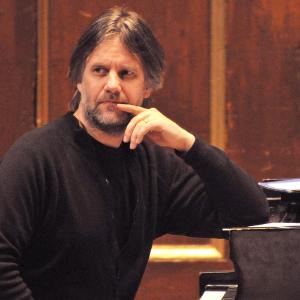
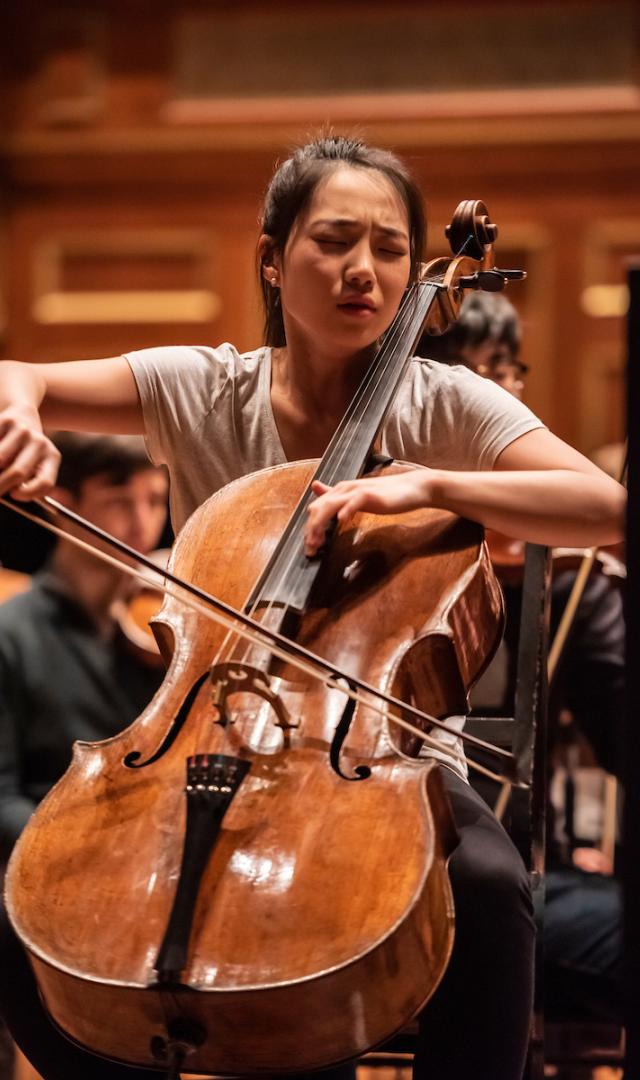
David Loebel, Associate Director of Orchestras, conducts the NEC Philharmonia in an all-Hungarian program that includes Bartók's Piano Concerto No. 2, featuring soloist Yandi Chen, a student of Hung-Kuan Chen.
Loebel opens his program with the much-neglected Ernst von Dohnányi's Suite in F-sharp Minor from 1909. Richard Freed, the critic and annotator, has written of the work:
Anyone who has ever heard Dohnányi’s orchestral Suite in F-sharp Minor, Op. 19, must wonder about the incredible neglect of so substantial, brilliant and altogether ingratiating a work. There is not a single empty gesture in its half-hour span. Its four movements—a dazzling Andante con variazioni, a sly and bristling Scherzo, a lyric and songful Romanza, a rumbustious, exultant concluding Rondo (with a big, sweeping waltz and castanets)—call to mind the pianist Artur Schnabel’s reference to the Schubert sonatas as "a safe supply of happiness."
The piece is pure enchantment, with its abundance of good tunes, imaginative orchestral coloring (including some delicious solo passages for clarinet and cello), its prevailing sense of fantasy, remarkable range of mood, and unforced charm.
Loebel himself describes the Suite as "full of Hungarian paprikash," and writes:
To many, the names “Bartók” and “Kodály” are as linked as those of Bach and Handel, Mozart and Haydn, Debussy and Ravel, or Mahler and Bruckner. Unlike those other pairs of great composers, however, Bartók and Kodály enjoyed a lifelong personal friendship. More importantly, they were pioneers in researching Hungarian folk music and in bringing it before a wider public by incorporating its unique flavor into many of their compositions.
Yet, it was actually their compatriot and contemporary, Ernö Dohnányi (“Ernst von Dohnányi” in German), who dominated the musical scene in Budapest, particularly in the years between the World Wars. Universally recognized as one of the most accomplished pianists of his time, he was also director of the Budapest Academy, conductor of the Budapest Philharmonic Orchestra, and music director of the Hungarian Radio. A strong advocate of Bartók’s and Kodály’s music, Dohnányi conducted, among other premieres, the first performance of Kodály’s Dances of Galanta.
Dohnányi’s compositions may not have proven to be as enduring as those of his more overtly nationalistic colleagues, but they nonetheless hold many rewards for performers and listeners alike. Indeed, some of his chamber music is frequently heard, notably the Serenade for string trio and the First Piano Quintet; among his orchestral works, the Suite in F-sharp Minor certainly deserves to be better known. Although there are passages obviously influenced by Brahms or Richard Strauss, it is nonetheless highly original and charming music containing attractive melodies, rich harmonies, colorful orchestration, and ample opportunity for individual players to shine.
The program closes with Zoltan Kodály's Galanta Dances, a setting of folk dances from the area (now a part of Slovakia) where the composer spent much of his childhood. Kodaly wrote in the preface to the printed score:
"The author spent the most beautiful seven years of his childhood in Galánta. The town band, led by the fiddler Mihók, was famous. But it must have been even more famous a hundred years earlier. Several volumes of Hungarian dances were published in Vienna around the year 1800. One of them lists its source this way: 'from several Gypsies in Galánta'... May this modest composition serve to continue the old tradition."
What's the sound of a Ragtime
Orchestra? A Theater Orchestra?
Come back next week and find out.
Are you an NEC faculty member or student who is giving a school concert? Submit your artist and repertoire information now!


MILES DAVIS