The future of music, made here.

From Grunge to the Houston Grand Opera: Conductor and NEC Alumnus James Gaffigan on His Path to the Podium

April 27, 2026

From Grunge to the Houston Grand Opera: Conductor and NEC Alumnus James Gaffigan on His Path to the Podium

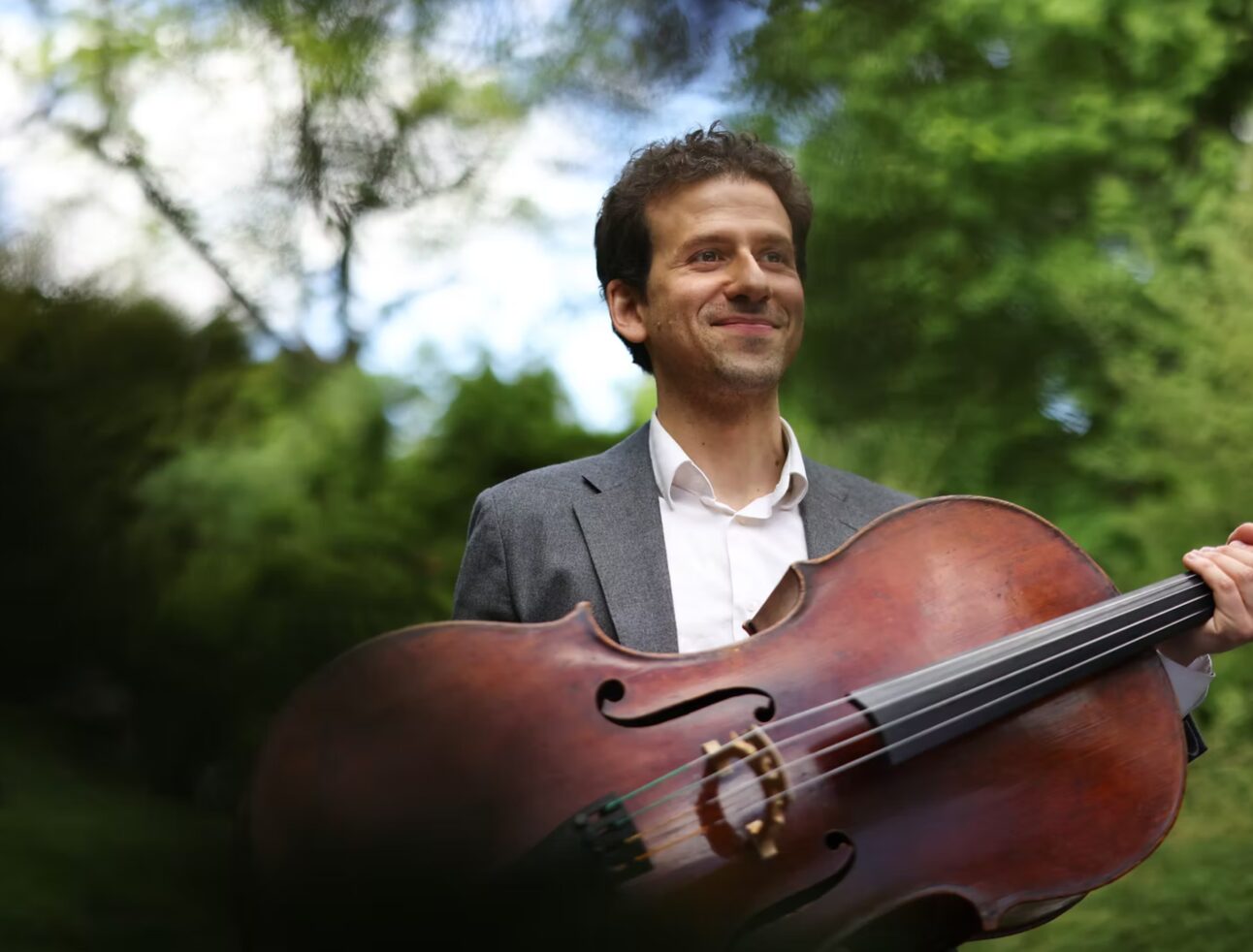
James Gaffigan. Photo by Mikel Ponce.

In November, the Houston Grand Opera named NEC alumnus James Gaffigan ’01 its next music director. Gaffigan, who’s conducted opera and orchestral performances with major ensembles and companies in the United States and abroad, will serve as music director designate at the HGO during the 2026–2027 season and begin his tenure as music director at the start of the 2027–2028 season. We recently spoke with Gaffigan on a range of topics, from his time at NEC to our field’s current career landscape, and more. 

This conversation was edited for clarity and length.

Q: You studied bassoon at NEC. What overarching lessons from your time here do you carry with you today to the podium?

A: I loved my teachers, Rick Ranti and Matt Ruggiero. They were both extraordinary teachers. But NEC gave me the opportunity to do a lot besides the bassoon. There was a lot of new music, a lot of composers who wanted their pieces performed, and the conducting staff was limited. So I got to premiere some pieces by my colleagues while at NEC. So basically I started with modern music at NEC, and Frank Battisti had a great conducting course that he allowed me as an undergrad to join. And I basically took advantage of this class of Frank’s, and of all of my composer colleagues who needed their pieces performed, to kind of learn my craft as a conductor at a very early age. So I was a bassoon student officially at NEC, but there were so many other fun things to do. I don’t know of many other schools that would have allowed that to happen.

Q: You played guitar before you picked up the bassoon. Who were you listening to at that time?

A: As a teenager, I gravitated toward Nirvana and the Seattle grunge scene. I liked Pearl Jam, I liked Soundgarden, but then I discovered a much different genre, this crazy other scene, Mr. Bungle and Nine Inch Nails, and then going back in time, people like Frank Zappa. And I fell in love with alternative (music). I liked the fact that there were a lot of alternative types of music out there. Jane’s Addiction — I loved Perry Farrell, I loved Porno for Pyros — all of these crazy bands that were out there. That was my music — Alice in Chains, all of that stuff. And then later on came Rage Against the Machine. When I was in high school, that just tore up the scene. And I just remember how much that music affected me, and I loved it. But at the same time, I think I had two different lives. I had my life as a jazz and rock musician, and then I had my life as like, “Wow, this Mendelssohn is really beautiful, and it’s better than anything else I’ve ever heard before.” So I think the clash of the two genres was very much a part of my life.

Q: You’ll be working at the Houston Grand Opera alongside General Director and CEO Khori Dastoor ’02, who’s another NEC alum. Khori studied voice here. What can you tell us about Khori’s vision and impact at the Houston Grand Opera?

A: Khori’s one of the few people in my life who says yes to everything. Most people say no, because it’s easier to say no and it’s easier to reject new ideas. But to Khori’s credit, she doesn’t shy away from new opportunities and new possibilities. I met Khori when I was at NEC and I always made a joke with her: “You’re going to be a big CEO one day.” It was always clear to me that she was a leader and she was extremely intelligent. She has this natural leadership capability. It was clear to me from a very early age. So I’m a big admirer of hers. And what I see in Houston — even before I was interested in the job, or she was interested in me taking the job, I saw that the company was flourishing at a ridiculous rate. When Khori got that job, I was always paying attention to what’s going on over there.

Q: Do you wear different creative or artistic hats depending on if you’re working in an operatic or orchestral context?

A: For sure. I think with opera it’s limited because you can only do so much. It takes so many people to be involved in one opera production. In a place like Houston Grand Opera, for example, you have six or seven productions a season. You have to be very careful how you choose your repertoire. Whereas with an orchestra, a symphonic orchestra, I think you need to expand the repertoire in a very quick manner, because in my opinion, especially about American orchestras, they do the same thing over and over again. And I think we have to push the boundaries more with orchestral repertoire. But that’s another conversation.

I think the good thing about HGO is that commissioning living composers has always been part of the tradition, and it continues to be extremely important. But I always say we need to build the trust of our audience. We need to give them what they want, but we also have to challenge them. The scariest thing is when these orchestras — when the marketing teams — say, “Well, Tchaikovsky sells.” Yeah, OK, Tchaikovsky sells, big deal. But you know, it sells because we’ve been shoving it down everyone’s throats. And it’s great but I’m sorry, it’s time to do more repertoire.

Q: What approach will you take in terms of cultivating and diversifying new audiences, and furthering the art form — and how does programming fit into that?

A: If we talk very openly about this, I look at cities like Atlanta and Detroit, and you look at Atlanta and I think there are more African American people living in Atlanta than white people. Yet there are maybe two or three Black people onstage at the Atlanta Symphony. And the thing is, the community looks at that and they think they’re not welcome. And this is a big problem in America.

For me, diversifying repertoire is a big priority, because I want people to relate to it. And Houston is the perfect example of that. If we don’t do Mexican zarzuelas and stuff like that there, it’s not fair. Repertoire is a really fun tool to diversify audiences. And the musicians love it, too. The musicians don’t want to be playing the same repertoire year after year.

Q: You’ve spent a lot of time working in Europe. What’s meaningful to you about working as an American artist with an American company?

A: Well, I’ve loved working in Europe. In a place like Berlin, we sell out everything. And there’s a big following at the Komische Oper Berlin, and the more crazy stuff we do, the more people come. And that can’t be said for the United States. 

You know, I grew up in a certain way, and then I moved to Europe. And my idea about music completely changed, my priorities completely changed, yet I always maintained certain American standards and things I’ve learned. So I would very much like to take what I’ve learned to an American institution. But at the same time, I think it’s really important that an American institution takes an American artist seriously, because as long as I was working in America, it was very rare for Americans to take leadership posts. It was like, well, culture comes from Europe, so we’re going to take a European. And that was always the case, with a few exceptions. And so I take great pride in coming home. Again, it sounds cheesy, but I like that Khori chose a middle-aged American dude, because it was an artistic decision. And I take great pride in that.

Q: What do you learn from working with students and other younger musicians?

A: I learn a lot from them because young people don’t come with preconceived ideas. Young people are not skeptical. They’re open. And I’ve learned a lot from being with them, whether it’s singers or orchestral musicians. They’re like sponges. They take all the information and then they run with it. And for me, it’s exhilarating. 

I think we’re all teachers because we need to give back what we’ve learned. And I think we’re empty if we don’t. I get such pleasure out of sharing information with young people. I find it fascinating. People always ask, “Do you treat a youth orchestra differently than you would treat Rundfunks (Symphonieorchester des Bayerischen Rundfunks) or the New York Philharmonic?” And in some ways, yes, but overall, not really. The end goal is still the same. They might not have the tools that the New York Philharmonic has or the Bayerischen Rundfunks has, but it’s my job to explain to them the basics, and I love doing that, because when you have to put it into words, you become a better musician yourself.

Q: How should today’s conservatory students be thinking about their professional futures and making an impact in their community?

A: The simple answer is you should not walk on the stage and just perform and walk off. You have a duty to explain what you’re doing and why it’s so wonderful. We’re no longer coming on in our tuxedo, bowing, and leaving. There’s so much more to it now. And I think the idea of sharing this wonderful gift that we have with the community, it’s more than just playing and leaving. We need to help them understand why this is great. 

I think the message I would send to young people now is: “Isn’t this wonderful, what we do? Let’s share this with other people, however that’s done.” It could be in so many different ways. It could be teaching at an elementary school. It could be teaching a singing course. It could be playing in the New York Philharmonic. It could be playing at the Metropolitan Opera. It could be music therapy. 

When I think of my past, growing up in New York City, in the public school system, we sang every day in school. It helps children kind of focus and it helps ground them. And dancing was a regular part of my school. It was a normal, fun thing we all did. And I think all children deserve that.

Q: Do you have thoughts on AI as it relates to our field?

A: I don’t treat it as a bad thing. I treat it as a tool to do all the nonsense we don’t want to do. Nothing will ever replace a human making music. The real thing will always be the real thing. People will always cherish real people doing real things. There’s no doubt in my mind about that.

recent news
From Grunge to the Houston Grand Opera: Conductor and NEC Alumnus James Gaffigan on His Path to the Podium

April 27, 2026

From Grunge to the Houston Grand Opera: Conductor and NEC Alumnus James Gaffigan on His Path to the Podium

Read More
NEC Presents Free, Family-Friendly Concert at DCR’s Hatch Memorial Shell

April 22, 2026

NEC Presents Free, Family-Friendly Concert at DCR’s Hatch Memorial Shell

Read More
Choral Program Features New Works by NEC Composers 

April 20, 2026

Choral Program Features New Works by NEC Composers 

Read More
  • From Grunge to the Houston Grand Opera: Conductor and NEC Alumnus James Gaffigan on His Path to the Podium

    April 27, 2026

    From Grunge to the Houston Grand Opera: Conductor and NEC Alumnus James Gaffigan on His Path to the Podium

  • NEC Presents Free, Family-Friendly Concert at DCR’s Hatch Memorial Shell

    April 22, 2026

    NEC Presents Free, Family-Friendly Concert at DCR’s Hatch Memorial Shell

  • Choral Program Features New Works by NEC Composers 

    April 20, 2026

    Choral Program Features New Works by NEC Composers 

  • Morningside Music Bridge and New England Conservatory to Present Pianist Yuja Wang in Recital

    April 13, 2026

    Morningside Music Bridge and New England Conservatory to Present Pianist Yuja Wang in Recital

  • NEC Honors Violinist Adrian Anantawan with Conservatory’s Fourth Annual Marylou Speaker Churchill Award

    April 13, 2026

    NEC Honors Violinist Adrian Anantawan with Conservatory’s Fourth Annual Marylou Speaker Churchill Award

  • New England Conservatory Announces 155th Commencement with Distinguished Speaker Denyce Graves and Honorary Degree Recipients Gary Bartz and Gary Dunning 

    April 6, 2026

    New England Conservatory Announces 155th Commencement with Distinguished Speaker Denyce Graves and Honorary Degree Recipients Gary Bartz and Gary Dunning