
 Performances + Events
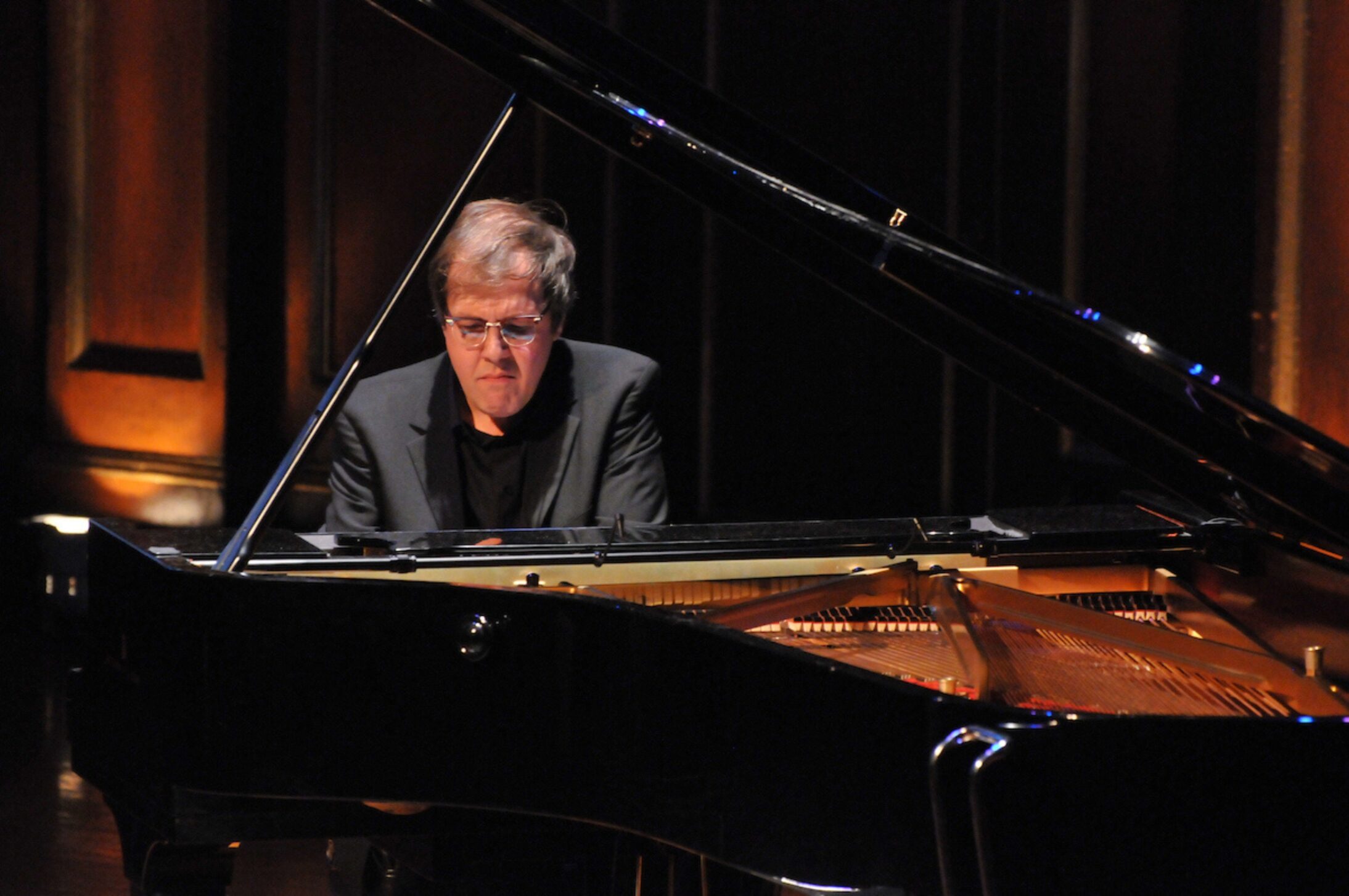
In 1994, Philip Glass composed six Piano Etudes as a vehicle for his own practice and performances. In 2003, having composed four more, Glass recorded the full set of 10 Etudes. That same year, New England Conservatory Piano Department Co-chair Bruce Brubaker recorded the original six Etudes in NEC’s Jordan Hall. A decade later, the composer, known for “music with repetitive structures” and for such operas as Akhnaten, Einstein on the Beach, and Satyagraha, among other works, had written another set of 10 Piano Etudes — which “tend to be much more extensive” than the first set, Brubaker said.
Additional recordings of Glass’s Piano Etudes have been made, and the complete set has since been showcased in concerts featuring numerous pianists each performing two or more of the studies. Such will be the nature of a July 22 concert at the Tanglewood Music Festival, where Brubaker and fellow pianists Timo Andres, Daniela Liebman, Lisa Moore, and Christian Sands will each perform four of the Etudes. These are pieces that have been renumbered and reimagined since they were first composed.
“Those original versions are no longer the pieces that exist now,” Brubaker said, adding that, for the Tanglewood program, “I have ended up with four pieces I don’t know.”
They are all “vehicles for the different kinds of expression Philip brings to music,” he said. And that expression is conveyed differently by the pianists who perform the pieces. Given that the Etudes are still relatively new works, historically speaking, their style is still being defined. “The pieces are getting their identities,” Brubaker said, through performances by pianists who are not all from the classical sphere. Sands, for example, is a jazz pianist and composer.
“A new language requires a new technique,” Glass has said.
On February 8, Brubaker will appear in a program in NEC’s Jordan Hall celebrating Philip Glass’s piano music and the composer’s 90th birthday.