The future of music, made here.

January 26

Due to current weather conditions, NEC is closed for all activities, classes, concerts, and events through Monday, January 26. Normal operations will resume on Tuesday, January 27. For more information about specific events, please visit the Performances + Events calendar.

Hasan Imam Hamdani ’28 DM, on the “Gravitational Pull” of Music, and More

January 26, 2026

Hasan Imam Hamdani ’28 DM, on the “Gravitational Pull” of Music, and More

Hasan Imam Hamdani

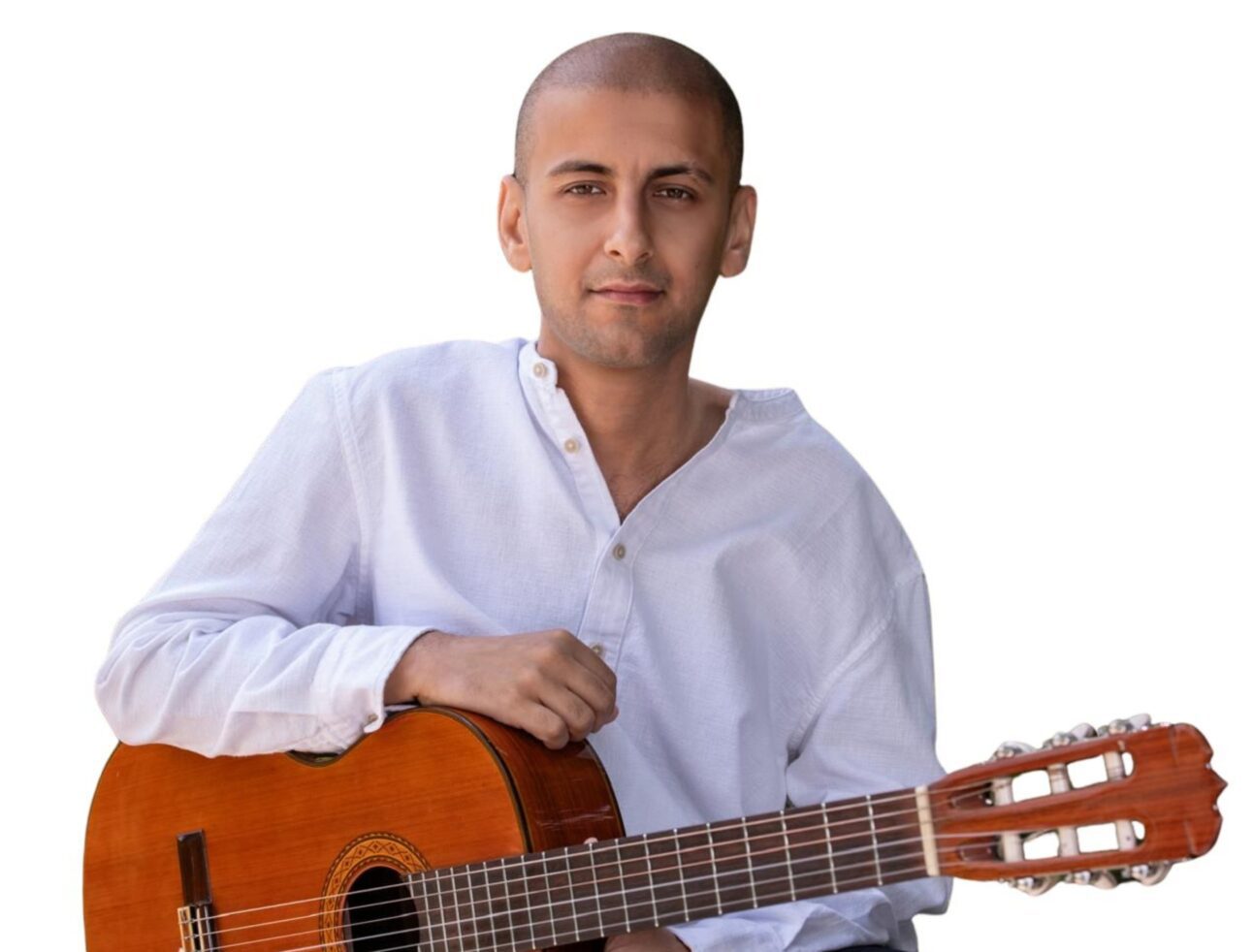
Guitarist, composer, and educator Hasan Imam Hamdani ’28 DM recently recorded a Studio Session in which he performed the Afghan folk song “Leili Jaan” with Ali Arshi (tar, voice) and two original songs, “Joy” and “Nadi,” with NEC faculty member Mal Barsamian (oud). Hamdani, a doctoral candidate in NEC’s Contemporary Musical Arts Department, is the artistic leader of the Imam Collective, “a community of musicians that explores and threads music disciplines from around the world,” and teaches global music at Towson University and Montgomery College. He served in 2024–2025 as the Strathmore Artist in Residence. We spoke with Hamdani about the Studio Session, his studies and pedagogy, leadership, collaboration, and more.

Q: Your music has a meditative quality, and a sense of patience. This seems like an extension of your personality. Does that feel true?

A: For years, I have used music as a pacifying force in my life. I hold on to fears, especially about possibilities or futures that feel unsettling in the present moment. To counter this, I listen to music with a calming quality. Ultimately, that influence comes through in my own music, perhaps giving it its meditative character. As for patience, I equate it with silence. There is a beautiful passage in the Tao Te Ching: 

“Do you have the patience to wait till your mud settles and the water is clear? Can you remain unmoving till the right action arises by itself?” 

Music is evanescent as a medium, and that is what makes it so appealing to me. It disappears. Therefore, the strongest aspect of any piece of music is silence/patience. It feels like a gravitational pull, with each note yearning to burst out and draw back toward its resting place. When used well, its power can be overbearing. I recommend listening to an Alaap by Ali Akbar Khan to hear patience and silence used in this way.

Q: You mention in this Studio Session that your original composition “Joy” was “influenced by the Indian classical music Raga Desh,” and that your tune “Nadi” is “based on this concept in Hinduism called Nada Brahma, which equates to sound being the source of all existence.” Talk if you would about the intersection of curiosity, inspiration, and creativity.

A: One of the most profound and consistent uses of music throughout human history has been its role in expressing the divine. If we interpret scriptural texts literally, many point to sound as the originating source of the universe. 

In Hinduism, the concept of Nāda Brahma “Sound is God/Eternal Sound” expresses this idea directly. Since sound is vibration, the very fabric of existence is perceived to originate from this primordial vibration. The Tanpura (complete sound), a drone instrument that provides a continuous harmonic space in Hindustani classical music, is a sonic metaphor for the underlying unity of the universe. 

In Islam, the Qur’anic phrase “Kun fa-yakūn” (“God Said Be, and it is”) illustrates the divine creative act as a spoken command, linking existence to sound. Similarly, the Gospel of John opens with, “In the beginning was the Word, and the Word was with God, and the Word was God.” This “Word” can be literally interpreted as an audible manifestation. Breath, after all, is inherently audible; inhaling and exhaling creates a sound. From this perspective, the first sign of life was sound: breath = sound = word. 

Sound connects me to something far greater than myself. It is this metaphysical experience that drives my curiosity, inspiration, and ultimately my creativity.

Q: This Studio Session also features a performance of the Afghan folk song “Leili Jaan,” whose lyrics, you point out, are about “a yearning for love, and a devastation caused by that longing and yearning.” In what ways is performance a natural vehicle for understanding and education?

A: It is believed that some music traditions can never create prodigies. Why? Because to successfully play their repertoire, one must deeply feel. This goes beyond technical virtuosity and the intellectual ability to solve a musical problem. To transmit a devastation caused by yearning, can only come with age and time.

Can a performance transmit that yearning? Maybe. I do think performance can be incredibly deceptive. A hierarchy exists between the performer and the audience in which the performer controls what is transmitted and how it is transmitted. Many music disciplines train performers to mask the effort of performance, both the flux of internal experience and the physical exertions of the body. A performance carefully tailored toward an emotional effect is in my view an illusion. When we attend a performance, we consciously choose to believe in that illusion. 

However, performance can also be incredibly educational. I remember attending a concert of West African music, hearing the kora for the first time, and learning the stories of the Griot tradition. It revealed the shared human experience among people from around the world. Beyond that, all interpretation of a performance is subjective, in my view. If I can successfully convey the longing and yearning of “Leili Jaan,” well enough, but there is no guaranteed or uniform method to transmit the subtleties and range of human emotion.

Q: Your work reflects the ethos of NEC’s Contemporary Musical Arts Department. How do the faculty at NEC model that ethos?

A: It is safe to say that the Contemporary Musical Arts Department is unique in academia, especially at the doctoral level. The history of this department is also very special, considering how groundbreaking it was and continues to be.

There is a strong emphasis on engaging with multiple musical disciplines and on using the ‘inner ear.’ The faculty represents many of the disciplines that interest me, including Persian, West African, Turkish, and Arabic music, to name a few. Depending on the students’ interests, these disciplines can be presented either through a traditional conservatory lens or within their natural cultural context, both of which are of particular relevance to my work.

Q: What have you learned as an artist through your leadership of the Imam Collective, which you’ve described as “a community of musicians that explores and threads music disciplines from around the world, tethered to the social narrative of our time”?

A: Imam Collective is a direct reflection of my ever-evolving musical interests. It functions as an expanding community of musicians coming together to collaborate on cross-cultural projects. In 2022, I released an EP with sarod player Manik Khan under the Australian label Worlds Within Worlds, exploring West African and Hindustani classical music. As Strathmore’s artist in residence, I developed Strings Across Boundaries, a project that brings together string instruments from around the world. In 2024, I toured Europe with Mirza Redzepagic, presenting maqam, raga, and flamenco traditions through the guitar. This spring, Imam Collective is the artist in residence at Montgomery College, where I will lead two workshops and present a concert featuring an ensemble of guzheng, guitar, and oud. Each of these projects serves the ultimate goal of cross-cultural dialogue through music. 

Through leadership, I have learned trust and humility. In my experience, meaningful collaboration requires curiosity, patience, and a willingness to relinquish control, to let one’s experience be shaped by others.

Q: What can collaboration teach us about ourselves and the impact we can have in the world through music and art?

A: Our present moment is a reminder of art and its power. Structures are built and destroyed every day; what remains are our stories and songs. From each collaboration, I learn empathy and how to embrace imperfection. I engage with my own fallible nature and empathize with others as they navigate their own. To that end, the most fulfilling collaboration is one without an ideal, with no fixed point of departure or arrival.

Q: You teach world music at Towson University and Montgomery College. What lessons from your work at NEC have informed your pedagogy? And what of your own do you bring to teaching?

A: Teaching has been an incredibly fulfilling experience. Some of the students in my Global Music Traditions course are pursuing paths other than music. There is a sincerity in their engagement with music that I deeply appreciate. Their perspective is a reminder to step outside my own musical worldview and consider how music can be experienced beyond the perspective of professional musicianship. 

As a music director, I encourage my ensembles to engage with music beyond the page. While notation is important, I aim to cultivate musicianship that allows students to respond to one another, not simply react. This deep level of listening and communication requires complete presence of mind and the ability to participate in subtle gestures. 

At the same time, being a student at NEC has been deeply rewarding. I take mental notes in class observing gestures, activities, assignments, or simply the energy of a professor. Pedagogically, my studies at NEC have been particularly eye-opening, for example George Russell’s Lydian Chromatic Concept encourages viewing harmony beyond its traditional tonal function, in a more unified and complete way, opening a world of possibilities.

Q: What are you reading, watching, and/or listening to lately that’s particularly inspiring?

A: Reading: Samarkand by Amin Maalouf. Watching: Iranian filmmaker Jafar Panahi is banned from making films in Iran. With very little resources he still manages to make great movies. I came across his work while taking Persian lessons. Taxi and This Is Not A Film are great! Listening: Egyptian musician Sayed Darwish, especially “Zourouni.” Beautiful song.

recent news
Hasan Imam Hamdani ’28 DM, on the “Gravitational Pull” of Music, and More

January 26, 2026

Hasan Imam Hamdani ’28 DM, on the “Gravitational Pull” of Music, and More

Read More
BSO Principal Double-Bassist and NEC Alumnus Caleb Quillen Joins Conservatory’s Faculty 

January 26, 2026

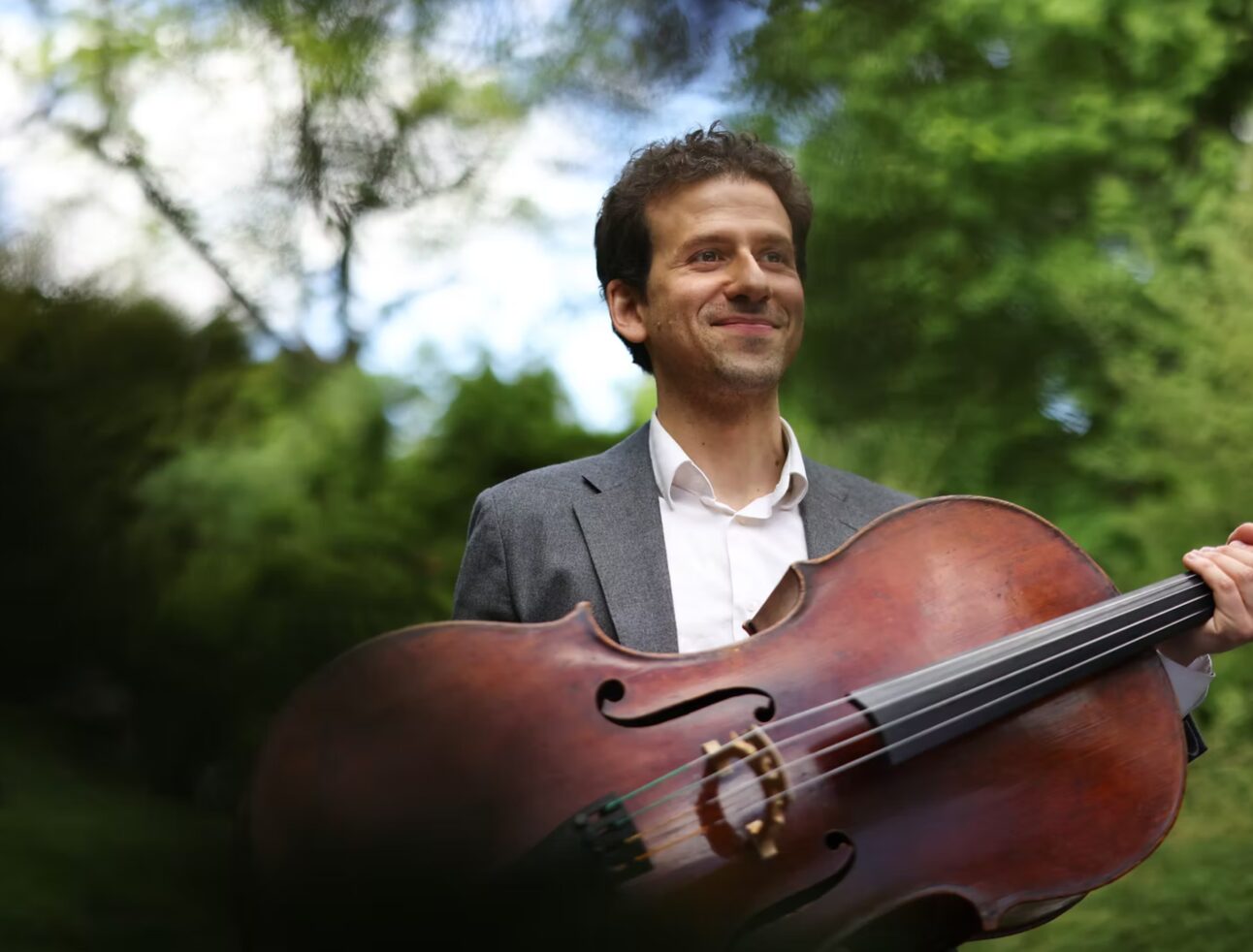
BSO Principal Double-Bassist and NEC Alumnus Caleb Quillen Joins Conservatory’s Faculty 

Read More
NEC Singers Advance in Prestigious Opera Competition 

January 12, 2026

NEC Singers Advance in Prestigious Opera Competition 

Read More
  • Hasan Imam Hamdani ’28 DM, on the “Gravitational Pull” of Music, and More

    January 26, 2026

    Hasan Imam Hamdani ’28 DM, on the “Gravitational Pull” of Music, and More

  • BSO Principal Double-Bassist and NEC Alumnus Caleb Quillen Joins Conservatory’s Faculty 

    January 26, 2026

    BSO Principal Double-Bassist and NEC Alumnus Caleb Quillen Joins Conservatory’s Faculty 

  • NEC Singers Advance in Prestigious Opera Competition 

    January 12, 2026

    NEC Singers Advance in Prestigious Opera Competition 

  • Nourished By Camaraderie, I’m With Her Explores Collaboration and Craft 

    January 5, 2026

    Nourished By Camaraderie, I’m With Her Explores Collaboration and Craft 

  • In Transformative Opportunity, Endowment Challenge Aims to Strengthen NEC for Generations

    December 15, 2025

    In Transformative Opportunity, Endowment Challenge Aims to Strengthen NEC for Generations

  • NEC’s Spring 2026 Concert Season Promises Compelling and Imaginative Performances

    December 10, 2025

    NEC’s Spring 2026 Concert Season Promises Compelling and Imaginative Performances