The future of music, made here.
Home Expanded Education Adult EducationAdult Education Classes and Ensembles

Adult Education Classes and Ensembles
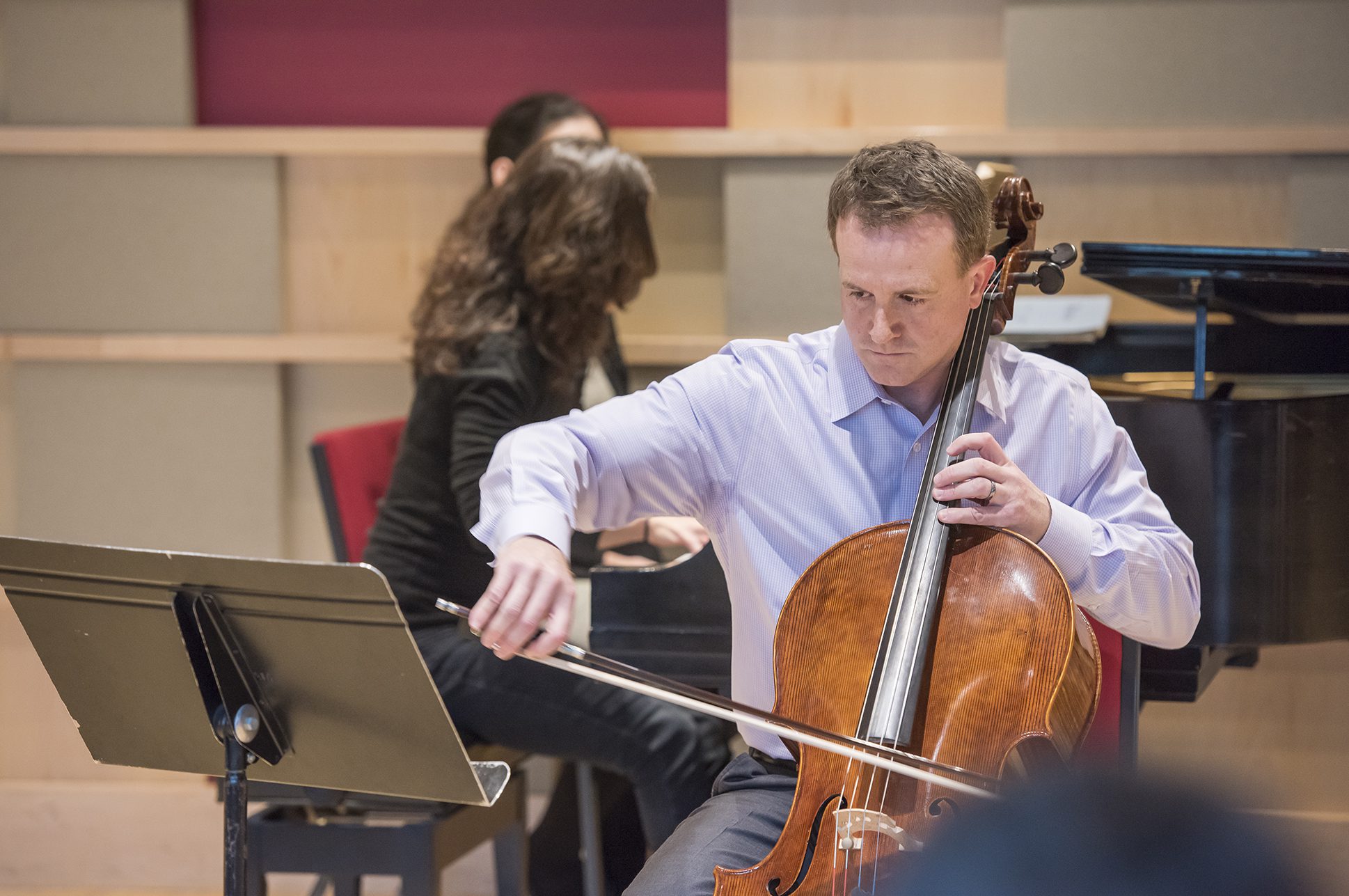
Adult musician playing the cello.

Continue your musical journey with NEC’s Adult Education classes and ensembles.

Request Information
Adult musician playing the cello.

In-person Classes and Ensembles

These classes and ensembles take place in person on New England Conservatory’s Boston campus.


Scheduled according to student instructor availability. (1 hour per week)
Various Instructors
Tuition: $1,050

NEC Adult Education offers chamber ensembles (small ensemble with one on a part) for string, woodwind, brass, and piano students. Chamber music at NEC connects musicians together based on the common interest of their love of music. Each group is coached by a highly experienced teacher and performer who has a passion for chamber music and loves to work with adult learners. Groups are determined by ability, instrumentation, and scheduling availability. Each ensemble receives 15 hours of coaching throughout the semester, scheduled according to the mutual availability of the group members and coaches, and will have the opportunity to perform in an end-of-semester concert.

All registered students must also submit the Chamber Music Placement Form to ensure appropriate placement in a chamber group. Only registered students will be placed in groups.

Registration and Placement Form submissions are both due  August 1, 2026

Wednesday, 6 – 8 p.m. (2 hours per week)
Fredericka King, Instructor
Tuition: $1,095

For beginners, this class provides a welcoming and easy introduction to the piano and keyboard instruments. Students will learn note-reading, rhythmic skills, and technique to play a variety of repertoire for new pianists. No prior piano or keyboard experience is required. For students who have had prior experience playing piano, or who have participated in a previous session, customized instruction will help boost their reading and technique levels and enable them to progress to more advanced repertoire. NEC’s Keyboard Studio facilities include individual keyboards and headphones for each student, allowing each person to comfortably practice at their own skill level.

First class meeting:  September 16, 2026


Wednesday, 6:45 – 8:45 p.m. (2 hours biweekly)
Aimee Tsuchiya, Instructor
Tuition: $1,095

The Piano Master Class Series offers pianists the chance to perform polished works for a class of their peers, led by a guest faculty pianist from NEC Adult Education, NEC College or other guest faculty. Every two weeks, the master class will showcase three to four different adult pianists of all levels from our class and the interactive feedback of a leading artist-instructor.

Performers will receive in-depth instruction and advice at a high level of musicianship to further refine and inform their performances. Audience class members can draw ideas of interpretation and execution for their own edification on a broad range of works and from a diverse artistic community. Audience participation in the form of Q&A is encouraged! To broaden our understanding and perspective even further, guest lecturers from other departments (theory, composition, history, etc.) may present on performance-related topics. Each semester will conclude with a final recital by all participants, performing works they’ve played in class during the course of the term.

Please note that this course is intended for students who have studied piano for 5 years or more. Email ee@necmusic.edu with any questions.

Class Meeting Dates for Fall 2026: 9/9, 9/23, 10/7, 10/21, 11/4, 11/18, 12/2, 12/16


Tuesday, 6 – 8 p.m. (2 hours biweekly)
Konstantinos Papadakis, Instructor
Tuition: $1,095

This class, designed for intermediate to advanced level performers, will address technical, stylistic, and conceptual issues in order to deepen participants’ musical understanding and provide an artistic context to their repertoire. Practice techniques and performance preparation will also be addressed. The seminar will be conducted in the format of a master class. All active participants will be coached by Konstantinos Papadakis. The seminar will culminate in a public concert at the end of each semester. All participants are expected to perform in the concert.

Audition with instructor Konstantinos Papadakis required. No specific repertoire required. Email konstantinos.papadakis@necmusic.edu with any questions.

Class Meeting Dates for Fall 2026: 9/8, 9/22, 10/6, 10/20, 11/3, 11/17, 12/1, 12/15

Monday, 6:30 – 9:15 p.m. (2 hours 45 minutes weekly)
Erica Washburn, Instructor
Tuition: $150

The NEC Symphonic Choir is the Conservatory’s resident community chorus. Ranging from 80 to 90 members and open to all students, regardless of major and year, as well as community members by audition, this ensemble offers its musicians the opportunity to perform music from all styles and periods of choral literature, extending beyond traditional Western masterpieces to the music of non-European cultures. The Symphonic Choir collaborates with NEC’s large instrumental ensembles, as well as with ensembles in greater Boston, and gives its concerts in NEC’s Jordan Hall as well as other iconic performance venues in the greater metro area. *NB – Fundamental music reading skills are required to participate in the NEC Symphonic Choir.

Please note: Registration is not a guarantee of enrollment — this class requires an audition. Contact ee@necmusic.edu to set up your audition.

First class meeting:  September 14

Fall 2026 Concert Date: Friday, December 4, 2026 – Church of the Covenant (67 Newbury St)

Fall 2026 Featured Repertoire: Benjamin Britten’s A Ceremony of Carols, Rejoice in the Lamb, and other works. Guest organist: Thomas Handel.

Sundays, 5-6 p.m.
Adam Hendey, Instructor
Tuition: $1,095

Students in the Celtic Music Ensemble explore traditional folk music from Ireland, Scotland, Wales, and beyond. Through learning tunes by ear, students develop aural skills and become familiar with the unique sounds and rhythms that exemplify these styles. In addition to instrumental performance, students learn traditional folk dances. No prior celtic music experience needed! 

First ensemble meeting: September 13, 2026

Sundays, 3-4 p.m.
Noah Fishman, Instructor
Tuition: $1,095

Explore American folk, old-time, celtic, bluegrass, and contemporary acoustic styles (Hozier, James Taylor, The Wailin Jennys) through Folk/Acoustic music ensemble! Much of the repertoire will be learned by ear and arranged as a group while also working with lead sheets and chord charts to understand song forms, accompany melodies, and contribute to group arrangements. Open to a range of acoustic instruments (voice, fiddle, guitar, mandolin, banjo, etc). No prior ensemble experience needed!

First class meeting: September 13, 2026

Scheduled according to student and instructor availability. (1 hour per week)
Various Instructors
Tuition: $1,095

World-class instructors. Individualized learning. NEC Adult Education offers Jazz Ensembles for all experience levels — from seasoned pros to total beginners. All participants get the chance to shine as a soloist and accompanist. You’ll receive personalized attention from your coach, who plays an instrument alongside you, fostering a collaborative and supportive environment. The ensembles are carefully formed considering factors like instrumentation, experience, age, and availability. Each ensemble performs on campus once per semester, and sometimes at special events, depending on student interest.

Placement hearings are held each semester during the registration periods.

All registered students will be contacted to gather participant information (experience, goals, availability, etc.) to ensure appropriate placement in a jazz ensemble.

Tuesday, 6:00-8:00 p.m.
Konstantinos Papadakis, Instructor
Tuition: $1,095

In these seven lecture-workshops we examine seven of the most ground breaking, inspired, innovative and beautiful masterworks written for piano. These works were composed by seven of the most important figures in Western music and represent monumental compositional and pianistic achievements in the piano literature. While each session is dedicated to a single composition, it also uncovers the composer’s artistic and cultural environment so we can better understand how these works were written and under what circumstances they were inspired. Through this journey of about 250 years, we also will be able to examine the amazing transformation of the piano as an instrument itself, the evolution of the piano playing technique and the way that these masters expanded its expressive power. Other topics to be discussed are style, form, rhythm, pedal, rubato etc. All scores, recordings and class notes will be available before the classes. Composers studied include Bach, Mozart, Beethoven, Brahms, Ravel, Prokofiev, among others. Students will be able to choose a piano piece inspired from the topics, eras or composers of these lectures and present it at a recital at the end of the semester.

Class Meeting Dates for Fall 2026: 9/15, 9/29, 10/13, 10/27, 11/10, 11/24, 12/8, 12/22

Tuesday, 6:00-8:00 p.m.
Susan Jarvis, Instructor
Tuition: $350

An Introduction to Music Notation – Music is an auditory language that is easily understood when we hear it. But reading the language can seem daunting, often confusing, full of codes and rules, and frequently contradictory. This course is designed for adults with no previous experience reading music, those with rudimentary or spotty knowledge, or anyone wanting to feel more confident in understanding sheet music. Over 5 one-hour weekly sessions, students will learn to understand and read the musical staff, clefs, rhythms, time and key signatures, intervals, scales, as well as tempo and articulation markings.

First class meeting: September 26, 2026

Hybrid Classes

These classes leverage the option of in-person learning and/or real-time virtual instruction.


Scheduled according to student and instructor availability. (1 hour per week) 
Aaron Michael Smith, Instructor
Tuition: $1,050

This class features a flexible attendance model that gives students the freedom to attend any session either in person or online.

The Composition Seminar will provide students who are interested in music composition with hands-on training and weekly discussions on composing music. Students will be writing short compositional exercises on a biweekly basis, and will be read by the instructor, fellow students, and occasionally guest musicians. We will be discussing our short compositions openly each course, and discuss various topics in composition. Such topics will include how to compose for specific instruments and players, employing different scales in a composition, current stylistic trends in composition, short-term musical phrases, and long-term compositional structure. The course will also culminate in the creation of a larger composition that will act as a final project.

Scheduled according to student and instructor availability.
Instructor TBD
Tuition: $900

This class features a flexible attendance model that gives students the freedom to attend any session either in person or online.

Unleash your inner star in this high-energy group setting designed to master the stylistic nuances of contemporary pop and rock music. Students will build a healthy vocal foundation by exploring belt techniques, mix voice, and stylistic effects like grit and breathiness while maintaining vocal longevity. Through collaborative exercises and solo coaching, you’ll develop the stage presence and “radio-ready” sound needed to command any performance.


Thursday, 6:30 p.m. – 8 p.m. (1.5 hours per week)
Clara Sandler, Instructor
Tuition: $1,600

Have you experienced tension/pain/fatigue/performance anxiety while playing your instrument or singing? In this class, you will learn tools that will help you find more freedom of movement, ease, and joy in your performance. This class will address how performance anxiety affects the whole body: the mind gets cloudy and the body gets tense: not a good combination for a good performance! We will learn tools to feel more grounded and centered so we can function with more ease. We will work on specific mindfulness techniques for musicians which help develop the awareness of how we use our body in our playing and help change habits that cause tension and pain. In this experiential workshop, we will learn how we usually interfere with the body’s natural alignment and coordination and how to bring ourselves into a more centered, balanced, and a freer way to play and sing. The class will be part lecture, awareness exercises, and performing. For over 100 years the Alexander Technique has helped musicians, actors, dancers, athletes and others get rid of unnecessary tensions and perform with ease and enjoyment. Open to musicians of all instruments, voice types, and genres.

First class meeting: September 13


Scheduled according to student and instructor availability. 1.5 hours a week.
Instructor TBD
Tuition: $1,600

Ear-Training I is a course that focuses on the continued development of aural and musicianship skills from Music Theory I and II. Using “fixed-Do” Solfège, students who successfully complete Ear-Training I should have the ability to notate and sing diatonic melodic lines at sight, perform rhythmic patterns in simple and compound meters with good conducting, study chamber score using treble, bass, and alto clefs with their corresponding transposition levels (E and D).

First class meeting: September 13, 2026


Scheduled according to student and instructor availability. 1.5 hours a week.
Instructor TBD
Tuition: $1,600

Ear-Training II integrates advanced musicianship studies with an investigation of 20th-century musical materials. Using “fixed-Do” Solfège, students who successfully complete Ear-Training II should have the ability to notate and sing diatonic, chromatic, post-tonal melodic lines at sight, perform rhythmic patterns in simple, compound, and irregular meters with good conducting, study chamber to orchestral score using treble, bass, alto, tenor and soprano clefs with their corresponding transposition levels.

First class meeting: September 13, 2026

Scheduled according to student instructor availability. (1 hour per week)
Jamie Stewardson, Instructor
Tuition: $1,095

This dynamic and inspiring course invites you to explore the art of creating your own music. Whether you’re a budding composer or an experienced musician, you’ll discover new techniques and creative strategies to bring your musical ideas to life. Students will experiment with various jazz and related styles and forms from different eras. The course focuses on essential composition techniques such as motivic development, rhythmic manipulation, re-harmonization, and the structure of form and phrase. Exercises and assignments are based on analyzing key contrasting jazz compositions and recordings, along with students’ personal descriptions of their goals and aspirations for their own work. Our supportive and collaborative environment encourages you to share your work and receive constructive feedback from your instructor and to work collaboratively with your fellow composers. You’ll have opportunities to workshop your compositions, and arrange pieces for various small ensembles. Join us in Jazz Composition and let your creativity soar. Unleash your inner composer, gain confidence in your writing, and get your music performed!

Scheduled according to student instructor availability. (1 hour per week)
Jamie Stewardson, Instructor
Tuition: $1,095

Have you ever wondered how a songwriter creates harmonized voices over a chord progression? Have you ever thought about how different harmonies or chords affect how you feel? Have you ever considered writing down the musical ideas in your head? In this class, you will explore how different artists apply the techniques studied across various styles and time periods. Whether you’re interested in jazz, classical, or any genre of pop music, this course will provide you with the tools to bring your unique musical interests and voice to the forefront. It will enhance your ability to communicate effectively and efficiently with other musicians, leading to more satisfying collaborations. As both a band leader and a band member, quickly understanding harmony, rhythm, and melody is essential.

During the course, students will listen to recorded examples demonstrating jazz theory in practice. They will also learn to apply these theoretical concepts to their instruments/voice and compose pieces that showcase their understanding of jazz theory. It’s important to note that this class covers very different material compared to a classical theory class. By building a solid foundation in jazz theory, students can make their private lesson time more effective, allowing their teacher to focus on technique and improvisation rather than fundamental theory. Additionally, the class is engaging and interactive, with opportunities for social interaction, playing, singing, and improvising in class, all while building essential skills through practical application of theory.


Scheduled according to student and instructor availability. (1 hour per week)
Nicholas Grondin, Instructor
Tuition: $1,095

This class explores the history of jazz and its related styles, tracing their African roots through the present day across the Fall and Spring semesters. Students will engage with recordings, participate in discussions, and gain cultural context to become more informed and inspired listeners, players, composers, and arrangers.

The course channels both instructor and student enthusiasm for jazz, highlighting the unique qualities of each piece and its cultural background. Students will expand their understanding of jazz styles and artists, accelerating their musical growth in lessons, ensembles, jam sessions, and professional performances.

Through recommended listening, classroom discussions, and background insights, students will deepen their knowledge of jazz history. Each semester concludes with a student analysis connecting a live jazz performance to its historical context.

By the end of the course, students will develop the tools to address questions such as:
“How does this piece illustrate the roles of instruments in an ensemble?”
“How do audience setting and performance practices shape the delivery of this piece?”
“In what ways do these sounds reflect and influence a specific subculture?”

First class meeting: September 13

Scheduled according to student instructor availability. (1 hour per week)
David Zoffer, Instructor
Tuition: $1,095

Jazz Styles is a four semester modular course (students can enter in any one of the four Fall or Spring semesters and the course material rotates). This class requires some basic prior knowledge of theory (major keys, chord spellings, etc.) In this class, compositions will be analyzed from both the “big picture” (form, harmony, arrangement, melody and rhythm) and the “little picture” (articulation and methods of improvisation and embellishment). Class assignments will include improvisation, model composition and transcriptions and are scalable to the amount of time students can put into the course in a given week. Students deliver a short in-class analytical presentation at the beginning and end of each semester year on a subject of their choice that shows how they would compose, improvise, arrange and/or practice differently after their research. Source Material for Jazz Styles I includes as study of Bebop (Charlie Parker), Harmonic/Thematic Free Improvisation (Cecil Taylor), Standard Forms (Miles Davis), Episodic Composition (Ornette Coleman), Thematic Harmonic Composition/Improvisation (Thelonious Monk), and Fusion (Mike Stern).

Scheduled according to student instructor availability. (1 hour per week)
Charlie Weller, Instructor
Tuition: $1,095

Would you like to be able to identify and transcribe the melodies you hear in your head or those sung or played by others? Do you want to recognize the harmonies that you hear and write them down? In this class, you’ll learn about rhythms, intervals, and chords, various listening techniques, and how to identify, understand, and transcribe what you hear. The emphasis is on ear training, vocal imitation, and rhythmic development. This class is highly recommended for instrumentalists who want to strengthen their connection between hearing and improvising, moving beyond just playing preconceived phrases. The course will use the vocabulary of rhythmic numbers related to time signatures and intervallic numbers related to major keys, time signatures and movable do. On that basis, students will be able to sing back and recognize basic chordal colors, bass lines, rhythms and melodic shapes as they relate to various common repertoire associated with jazz and related styles. This course continues into Spring Semester as Jazz Ear Training II.

Scheduled according to student instructor availability. (1 hour per week)
Instructor TBD
Tuition: $1,095

This course provides an introduction to the history of Western Classical music, tracing its development from the medieval period to the present while exploring major composers, genres, and stylistic movements within their cultural contexts. Through guided listening, score study, discussion, and brief written or creative assignments, students will develop critical listening skills and an understanding of how music reflects and shapes society. Topics include the evolution of forms such as the symphony, concerto, and opera, as well as stylistic periods from Baroque to Contemporary. By the end of the course, students will be able to identify key musical characteristics, recognize important works, and engage with music thoughtfully, gaining a deeper appreciation for the richness and diversity of the Classical tradition.

Scheduled according to student instructor availability. (1 hour per week)
Instructor TBD
Tuition: $1,600

Music Theory I is a course that focuses on mastering the fundamental musicianship skills of reading, ear-training, analysis, and writing. The goals of the course are to provide a solid conceptual understanding of music theory and develop musicianship skills in the following domains: identification of scales, intervals, and chords; notation and performance of simple diatonic melodic lines in treble and bass clefs, using both fixed-Do Solfège and scale degrees; notation and performance of rhythmic patterns in simple and compound meters; conducting patterns of 2, 3, and 4; analysis and composition of simple diatonic music with level-appropriate voice-leading and roman numerals.

Scheduled according to student instructor availability. (1 hour per week)
Instructor TBD
Tuition: $1,600

Music Theory II is a course that focuses on building upon the skills, activities, and concepts of Music Theory Level I, studying music in polyphonic texture. Students continue to develop their musicianship skills of reading, ear-training, analysis, and writing in the following domains: Notation and performance of diatonic melodic lines in treble, bass, alto clefs, using fixed-do Solfège; notation and performance of rhythmic patterns in simple and compound meters with conducting patterns of 2, 3, and 4; analysis and composition of polyphonic-texture music with level-appropriate voice-leading and roman numerals; playing scales, simple melodic lines, and chords on Keyboard.

Scheduled according to student instructor availability. (1 hour per week)
Instructor TBD
Tuition: $1,600

Music Theory III is a course that focuses on the study of harmony and musical forms through part writing and score study. Building upon the study of voice-leading and species counterpoint from Music Theory II, students will learn the various types of diatonic harmony, as well as harmonic function and common harmonic progressions. Class exercises include four-part (SATB) realizations of figured basses and composition of four-part harmony. Analysis of repertoire in this course will center around harmonic structure and its connection to phrase structure and musical forms.

Scheduled according to student instructor availability. (1 hour per week)
Instructor TBD
Tuition: $1,600

Music Theory IV is a course that provides opportunities for students to study and analyze a wide range of repertoire through the discussion of melody, harmony, and form. Building upon the skills learned in Music Theory III, chromatic harmony and post-tonal theory will also be introduced. Students are encouraged to analyze music of their choice, using the analytical tools studied in class. Level-appropriate readings and recordings will also be assigned for discussion throughout the year.

Scheduled according to student instructor availability. (1 hour per week)
Instructor TBD
Tuition: $900

Start your musical journey by learning basic chords and rhythms on the ukulele! Through guided group instruction, students will explore the fundamentals of the instrument while playing familiar and accessible songs. This course helps students develop listening and ensemble skills while introducing basic music theory through reading lead sheets and chord charts, all in a relaxed and supportive atmosphere.

Scheduled according to student instructor availability. (1 hour per week)
Instructor TBD
Tuition: $900

Explore the fiddle through a variety of musical traditions from celtic, bluegrass, and old-time. Students will learn melodies by ear while developing listening and ensemble skills through guided, group playing. No prior fiddle experience needed!

Scheduled according to student instructor availability. (1 hour per week)
Aaron Larget-Caplan, Instructor
Tuition: $900

Explore the versatility of the guitar through an engaging 8-week group class that introduces students to a variety of guitar styles. Each two-week unit will focus on a different genre, allowing students to build foundational guitar skills while discovering new techniques across musical traditions. Students will learn essential chords and strumming patterns through guided ensemble playing. Along the way, students will develop the ability to read chord charts and lead sheets, while gaining confidence playing in a supportive group setting.

Scheduled according to student instructor availability. (1 hour per week)
Instructor TBD
Tuition: $900

Over eight weeks, we’ll explore the art and craft of songwriting in a supportive, collaborative environment. Participants will dive into lyric writing, melody building, and musical storytelling, while learning how to move ideas from spark to finished song. Each session blends discussion, guided writing prompts, and peer feedback, giving writers of all levels a space to grow their voice and creative courage.

Online Classes

These classes can be taken completely online, offering real-time access to an NEC education from anywhere.

Classes Not Running

Not running in Spring 2025

6 Week Class


Andrew Schartmann, Instructor
Tuition: $599

This course explores the ever-changing face of video game music from its origins in the late 1970s to current trends in virtual-reality (VR) gaming. Drawing on primary and secondary sources from areas including music, computer science, ludology, and film studies, we will focus on how technology, market forces, and popular culture shaped compositional techniques for video game music. We we also explore how music’s role in game design has evolved over the past 50 years.

Not running in Spring 2025

6 Week Class

3 Sections Available:

Monday, March 10 – April 14, 2025: 6-7:30pm (1.5 hours per week)
Wednesday, March 12 – April 16, 2025: 6-7:30pm (1.5 hours per week)
Wednesday, March 12 – April 16, 2025: 7:30-9pm (1.5 hours per week)

Tuesday, 8 – 9 p.m. (1 hours per week)
Nat Seelen, Instructor
Tuition: $599

Welcome to your semester-long introduction to klezmer music. We review the history of our music, key musicians, recordings, and readings you need to know, and learn some of the core repertoire you’ll use for concert or simcha performances. We also cover the basic music theory of klezmer, including modes, cadences, time feel, and ornamentation. By the end of the course, you’ll be prepared to perform with a traditional klezmer band, or maybe even start your own!

Thursday, 7-8 p.m. (1 hour per week)
David Zoffer, Instructor
Tuition: $999

Jazz Styles is a four semester modular course (students can enter in any one of the four Fall Spring semesters and the course material rotates). This class requires some basic prior knowledge of theory (major keys, chord spellings, etc.) In this class, compositions will be analyzed from both the “big picture” (form, harmony, arrangement, melody and rhythm) and the “little picture” (articulation and methods of improvisation and embellishment). Class assignments will include improvisation, model composition and transcriptions and are scalable to the amount of time students can put into the course in a given week. Students deliver a short in-class analytical presentation at the beginning and end of each semester year on a subject of their choice that shows how they would compose, improvise, arrange and/or practice differently after their research. Module II (Odd-numbered years, Spring – 2025): Exploration of Post-Bop (Miles Davis, Wayne Shorter), Swing Ballad Composition (Duke Ellington), Reharmonization, and Contemporary Jazz, including Jazz-Influenced Pop (Stevie Wonder).


Tuesday, 6 – 7:30 p.m. (1.5 hours biweekly)
Konstantinos Papadakis, Instructor
Tuition: $1,050

In these seven 90-minute lecture-workshops we examine seven of the most ground breaking, inspired, innovative and beautiful masterworks written for piano. These works were composed by seven of the most important figures in Western music and represent monumental compositional and pianistic achievements in the piano literature. While each session is dedicated to a single composition, it also uncovers the composer’s artistic and cultural environment so we can better understand how these works were written and under what circumstances they were inspired. Through this journey of about 250 years, we also will be able to examine the amazing transformation of the piano as an instrument itself, the evolution of the piano playing technique and the way that these masters expanded its expressive power. Other topics to be discussed are style, form, rhythm, pedal, rubato etc. All scores, recordings and class notes will be available before the classes. Works studied include: Bach’s Well-Tempered Clavier (Book One), Mozart’s Sonata K.333, Beethoven’s Sonata “Appassionata”, Brahms’ Piano Quintet, Opus 34, Ravel’s Gaspard de la nuit, Prokofiev’s Second Piano Concerto. Students will be able to choose a piano piece inspired from the topics, eras or composers of these lectures and present it at a recital at the end of the semester.

1.5 hours per week (scheduled according to student and instructor availability)
Lautaro Mantilla, Instructor
Tuition: $999

In this hands-on ensemble, students will be introduced to creative ways to explore and develop their instrument techniques and the possibilities of musical growth and unique approaches to learning and playing in a band. By studying selected contemporary methodologies of improvisation, students will learn the fundamentals of rhythm, harmony, melody, and ear training. Selected repertoire and practical exercises will guide students down the path of finding their own voice and creating their own musical journey while they gain a better understanding of composition and improvisation.

1.5 hours per week (scheduled according to student and instructor availability)
Lautaro Mantilla, Instructor
Tuition: $999

This ensemble is an introduction to the diverse repertoire of underground music starting in 1970s to the present day. This music was (and is) created to represent cultural movements and to help shaping societies. By arranging and recomposing this repertoire, students gain knowledge of different compositional and improvisational approaches and explore different genres and styles.