
 Performances + Events
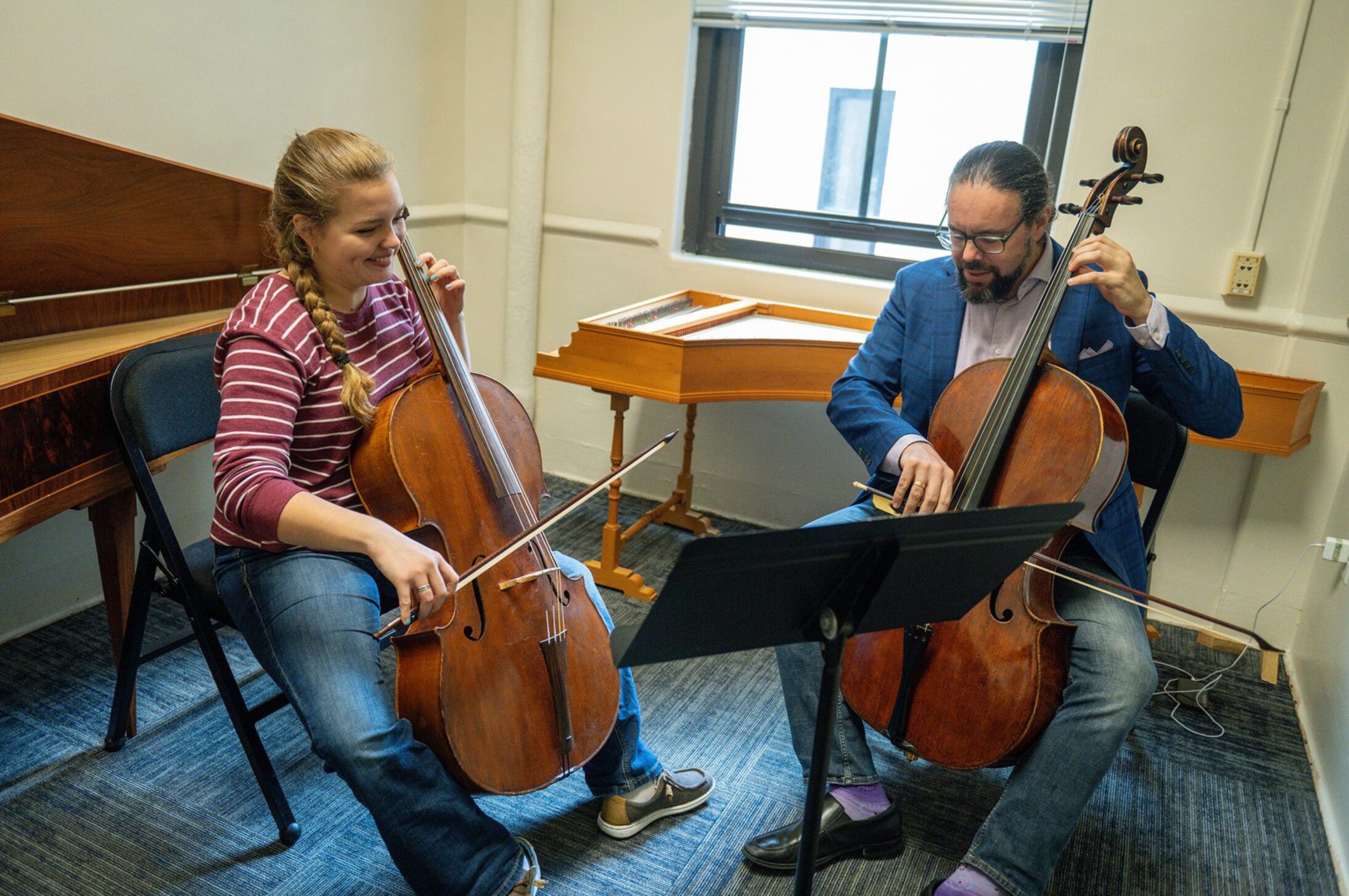
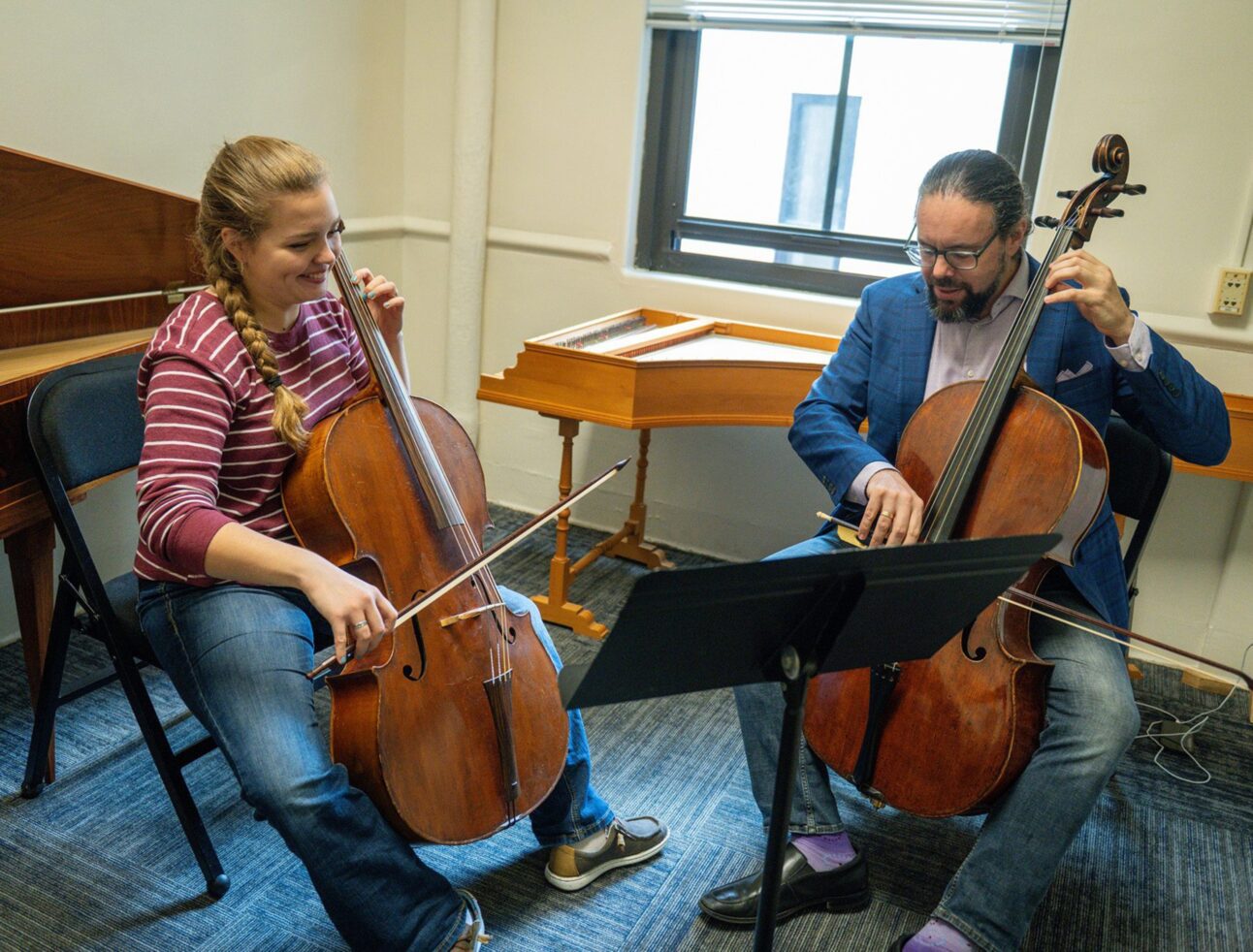
Guy Fishman felt an affinity for early music when, as a child, he first heard a recording of music by Vivaldi and Boccherini. Later, the soundtrack for Tous les matins du monde piqued his interest in historically informed performance.
Asked what drew him to music of the 17th and 18th centuries, Fishman ’10 DM, a member of New England Conservatory’s faculty and an alumnus, said, “I think it’s the emotional immediacy and the incisiveness of it.”
Fishman, who serves as principal cellist of the Handel and Haydn Society, looks forward to sharing his passion for Baroque music and historically informed performance this summer with participants in NEC’s Early Music Institute, which he directs.
For a week in late June, college students, pre-professionals, professionals, and adult amateurs (18 years of age and older) will study early music with a distinguished faculty and have access to NEC’s collection of period instruments which have been acquired through the generosity of Life Trustee Harold I. Pratt ’17 hon. DM, who endowed the Conservatory’s Pratt Early Music Program.
In addition to receiving daily instruction from acclaimed early music specialists, participants will attend lectures, rehearse Baroque works in chamber ensembles, and perform alongside the institute’s faculty in NEC’s Jordan Hall.
Fishman said his approach to teaching historically informed performance is to think about oration — to “basically teach linguistic skills” — explaining that historically informed performance mimics speech. “It’s hard to do,” he said, adding that instrumental and vocal performance has, over time, “shifted away from that.”
Paraphrasing Quintilian, Fishman said just as “an orator has to study music,” an early music performer must think about speech patterns. One is “inextricably tied” to the other. If someone says, “Your playing really spoke to me, they should mean that literally.”
Fishman’s enthusiasm feels contagious, and he’s eager for participants in the Early Music Institute to experience what he does through historically informed performance of Baroque works.
“I want them to advance whatever it was that drove them to come,” he said. “If they’re a professional, perhaps they’ll be invigorated by playing alongside our renowned faculty. If they’re brand new to historically informed performance, maybe they’ll be inspired to further explore period instruments. If they’re a non-professional player, we hope the inspiration they provide us is returned as motivation to keep early music in their lives.”
Learn more about and register for NEC’s Early Music Institute, which will take place June 21–27 on the Conservatory’s campus.