
 Performances + Events
When it was launched in 1977, the space probe Voyager 1 was affixed with a Golden Record whose contents include a recording of Flowing Water, a piece based on a 2,500-year-old Chinese melody and performed on the qin.
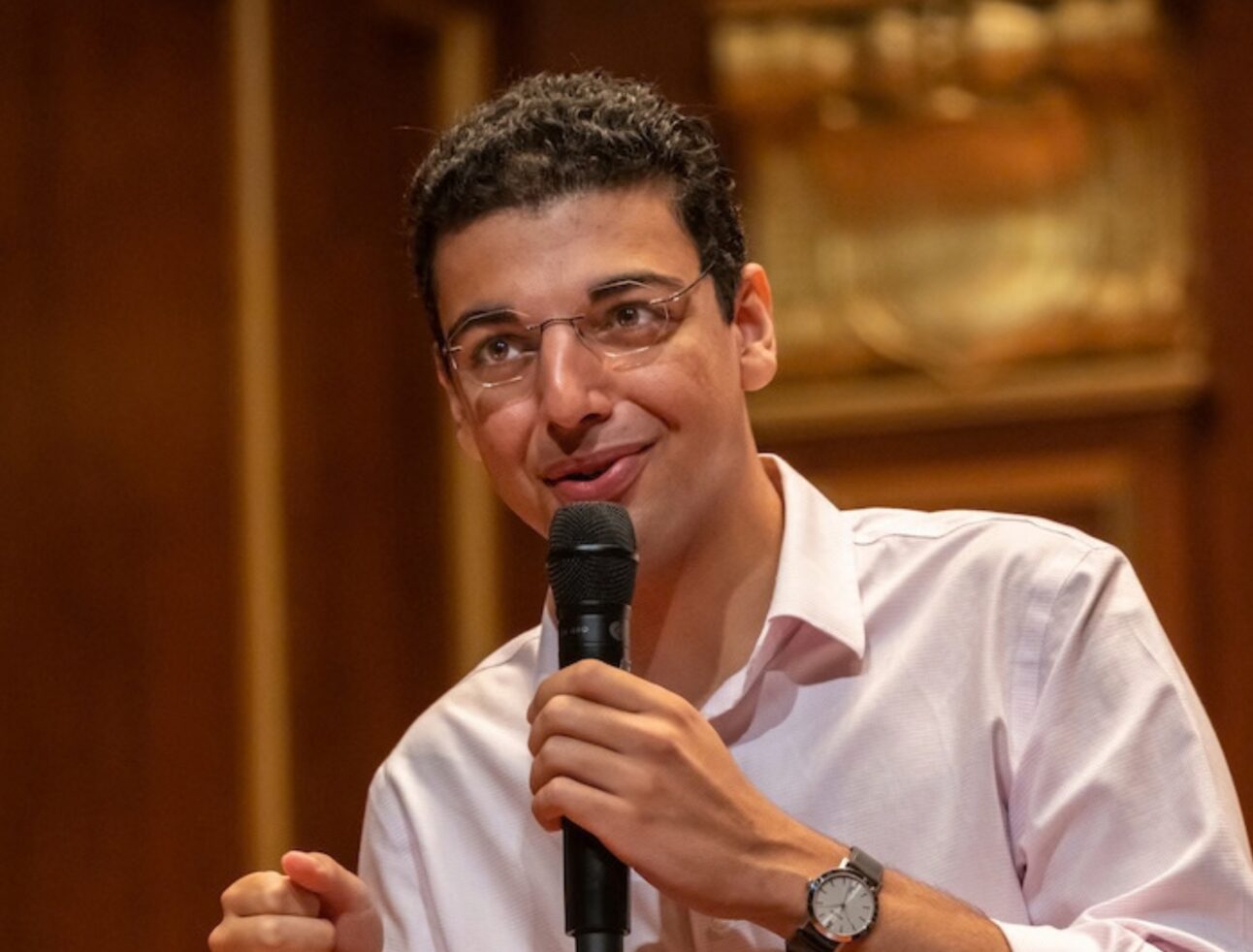
“The melody of Flowing Water carries a story of its own,” New England Conservatory alumnus Amir Siraj explained on September 23 at the United Nations.
“Bo Ya was a master of the qin, and Zhong Ziqi was a woodcutter who would listen. When Bo Ya played with mountains in his mind, Ziqi heard mountains. And when he played thinking of water, Ziqi heard water. When Ziqi died, Bo Ya cut the strings of his instrument and never played again,” Siraj said. “AI systems can already produce the sound in any style, in any voice. But Ziqi brought a whole life to the listening.”
Siraj (’17 Prep, ’23 Harvard/NEC), a pianist and astrophysicist, has been part of a monthslong series of conversations on AI and Human Development convened by U.N. Deputy Secretary-General Amina Mohammed and the U.N. Office for Partnerships. Discussions were held in Mexico City, Rome, Xi’an, and Cairo.
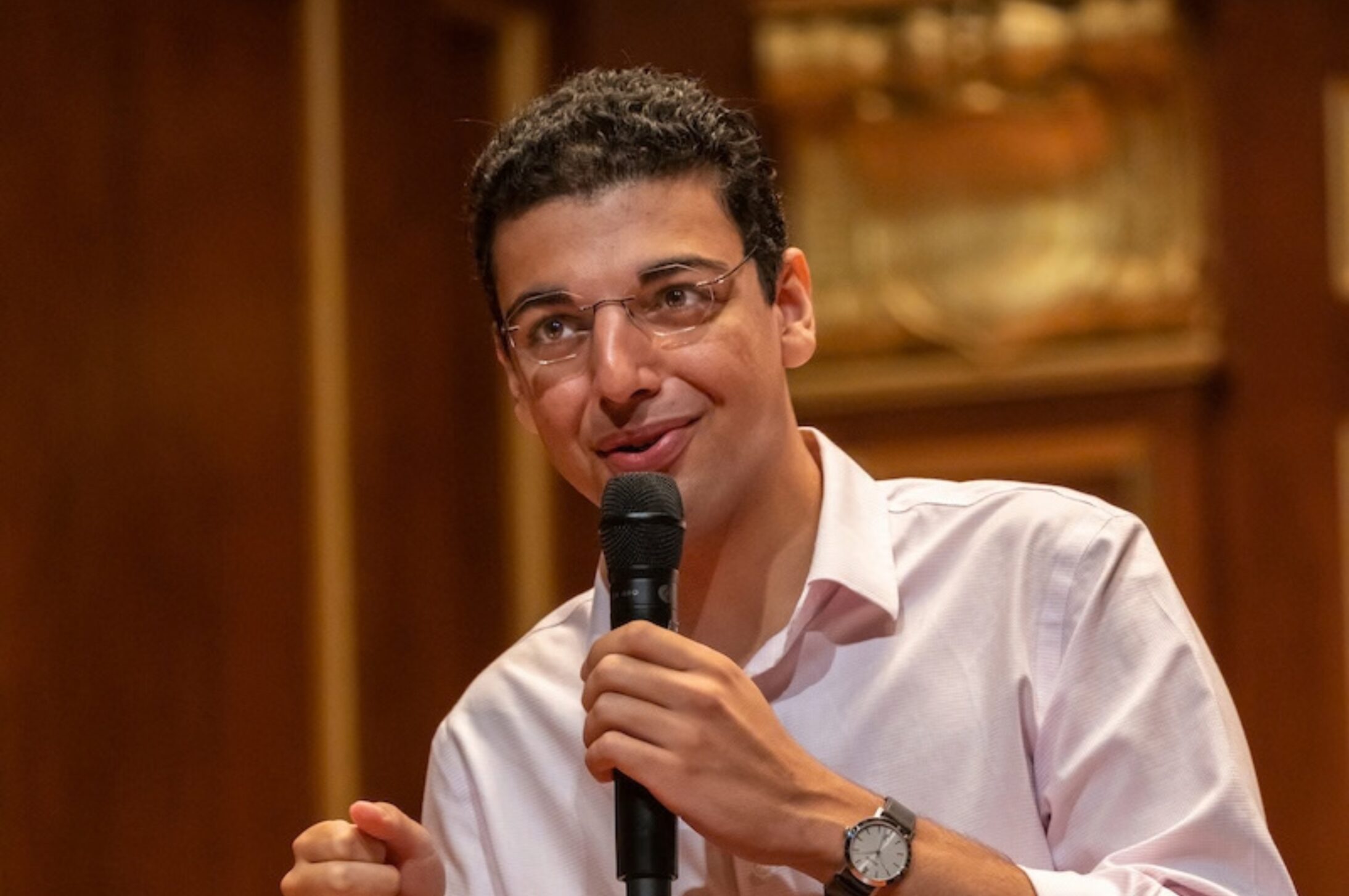
Siraj spoke and participated in a panel discussion on the subject of Creativity and Humanity in the Age of AI with actor Joseph Gordon-Levitt at the United Nations on September 23, during High-Level Week of the U.N. General Assembly’s 81st Session.
Journalist and broadcaster Zeinab Badawi, who is the president of the SOAS University of London, moderated a series of panel discussions held by distinguished thought leaders from around the world. She began her conversation with Siraj and Gordon-Levitt by saying, “I love opera. I wouldn’t like to go and see an opera where you’ve got a load of robots singing, even if they get the best pitch and so on. So this goes to the heart of creativity, doesn’t it? We admire human endeavor.”
“I have spent over 20 years of my life learning to play the piano and honing my craft,” Siraj said. “There were no shortcuts I could take … and I’m really grateful for that, because those years built me into the person who I am.”
Siraj worries that AI could jeopardize other people’s life experience.
“What concerns me,” he said, “is the possibility that children can be handed the result at the beginning and never have to go through the years that build a person.”
Still, he continued, “I am somewhat less concerned about AI’s impact on music.”
Siraj recalled a performance with cellist Yo-Yo Ma at the U.N. General Assembly in 2023, and listening back to a recording of that performance later.
“There’s something missing,” he said. “Whatever made that evening matter to the people in the room is absent” from the recording.
What’s important to those who gathered for the global conversations about AI and Human Development is the human experience.
“That’s what I think perhaps is the clearest description of what these convenings were all about,” Siraj said, “because, in every city, the things that people said mattered most to them and that they were most afraid of losing were things that only exist when people are together in community or that require years of learning.”
While AI is now part of our world and existence, we must decide “how we choose to live alongside these systems, and that is a decision about values,” he said.
Learn more about the AI and Human Development conversations here. Watch the full September 23 U.N. event and download a transcript here (the panel discussion featuring Amir Siraj and Joseph Gordon-Levitt begins at 1:26:20).