
 Performances + Events
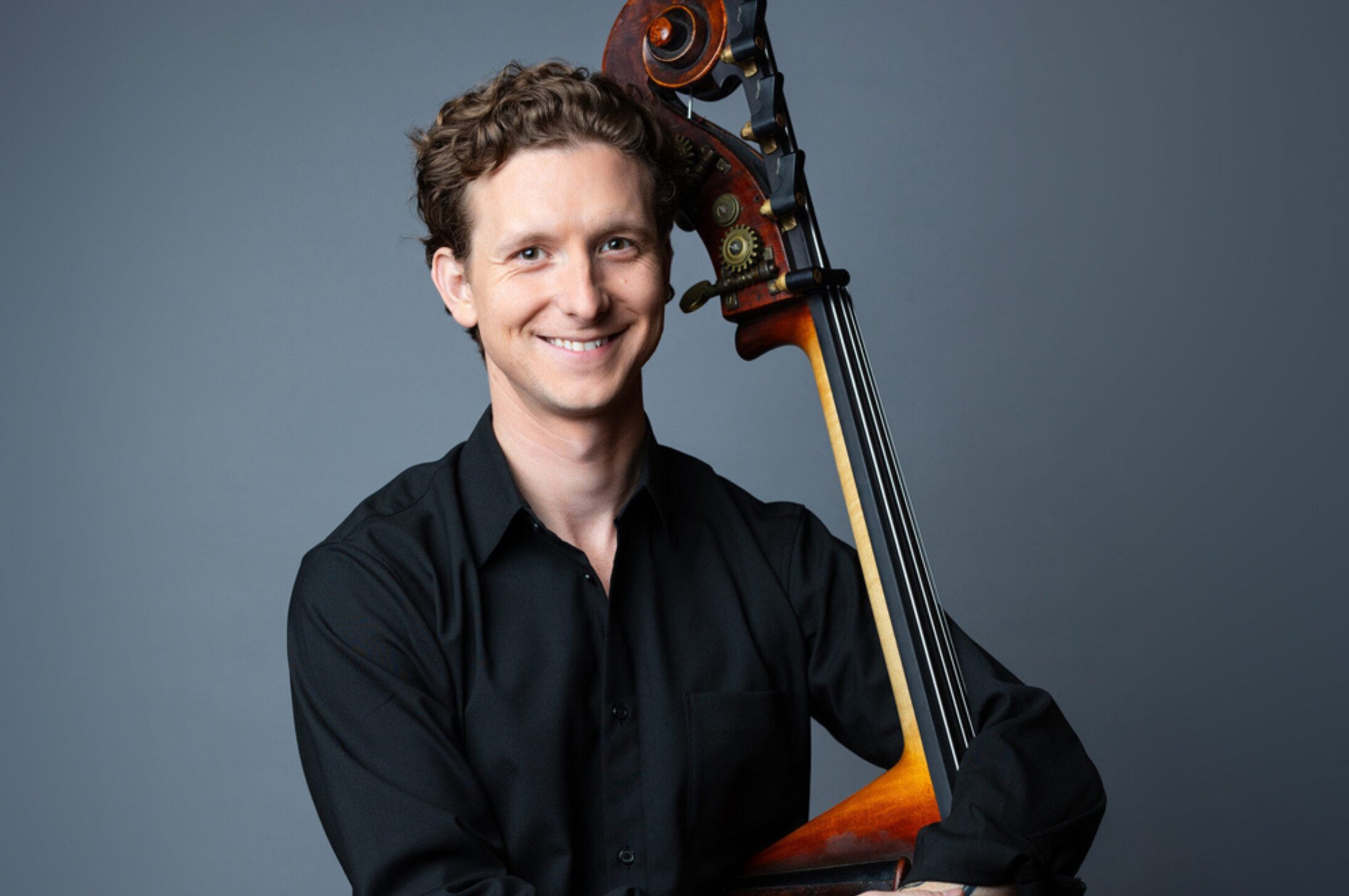
New England Conservatory is proud to announce the appointment of Boston Symphony Orchestra Principal Double-Bassist Caleb Quillen ’13 to its faculty. Quillen, an NEC alumnus, brings to his alma mater the “outstanding artistry” BSO Music Director Andris Nelsons has praised. Quillen holds the Harold D. Hodgkinson chair at the BSO and is a member of the Boston Symphony Chamber Players.
“In Caleb, students will find a model and a mentor whose experience has been shaped by some of the most acclaimed ensembles in the world, including the legendary Boston Symphony Orchestra,” Conservatory President Andrea Kalyn said. “We are thrilled to welcome Caleb to the faculty and back to NEC, where he began the development and refinement of his musicianship.”
Quillen was appointed principal double-bassist of the BSO in 2025, succeeding Edwin Barker, who held the position for 48 years. Quillen returns to Boston having been a member of the Dallas Symphony Orchestra and, before that, the Kansas City Symphony. He has also worked with the Chicago Symphony Orchestra, Detroit Symphony Orchestra, Houston Symphony Orchestra, and New York Philharmonic. Quillen studied at NEC with Donald Palma and Lawrence Wolfe and at Rice University with Paul Ellison and Tim Pitts. He has held fellowships at the Tanglewood Music Center and New York Philharmonic Global Academy.
Today, Quillen looks forward to sharing his knowledge and ideas with students at NEC. “One of the things that made NEC such a formative place for me as a student was the sense that professional artistry and education weren’t separate pursuits, but part of the same ecosystem,” Quillen said. “It was where I began to understand the level of care, discipline, and long-term commitment this art form demands, and what it truly means to build a life in music. Now, being on the educator side of that equation, I’m excited to help students make those same connections — to support them not only in developing their craft, but in orienting themselves toward the highest level of artistry and professionalism.”